





March 18, 2026 —As the war involving the United States, Israel, and Iran continues, concerns are growing that South Korea's construction industry may enter a structural downturn, facing simultaneous shocks on both supply and demand.
According to the "Construction Brief (Vol.99, March issue)" released on March 18 by the Korea Research Institute for Construction Policy (RICON), the current Middle East crisis is directly affecting Korea's construction sector by disrupting both crude oil production and distribution. Unlike the Ukraine war, where oil distribution remained relatively stable through alternative export routes, the current conflict involves compounded disruptions in both production and logistics. This has left Korea, which relies heavily on Middle Eastern oil, more exposed to the shock.
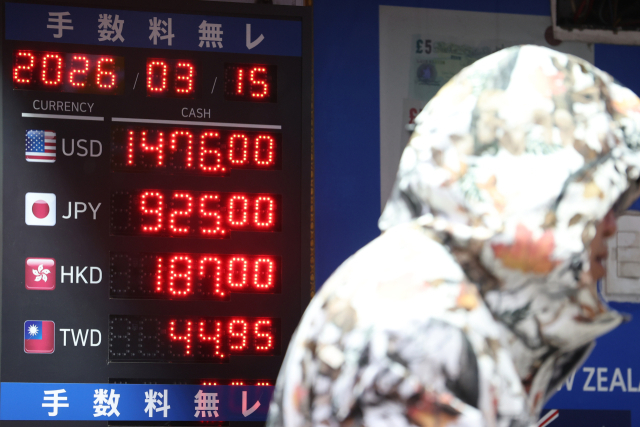
The key variable in the crisis is oil prices. Dubai crude surged more than twofold, from .2 per barrel on February 27 to 5.5 on March 13. Over the same period, the won-dollar exchange rate jumped from the mid-1,450 range to 1,499 won, marking its highest level since the 2009 global financial crisis. The benchmark KOSPI index fell 13.0% from its recent peak of 6,307 on February 26 to 5,487.2. Yields on three-year Korean government bonds also rose by 0.29 percentage points, from 3.04% on February 27 to 3.33% on March 13. The so-called "triple shock" of rising oil prices, exchange rates, and interest rates has now become a reality.
On the supply side, cost pressures are intensifying. RICON estimates that fuel costs for construction equipment account for about 30% of machinery expenses. A 20% increase in oil prices would inevitably raise civil engineering costs by 7% and building construction costs by 4%. In practice, domestic diesel prices surged 20.9%, from 1,597 won per liter on February 27 to 1,931 won on March 10. Although prices eased slightly to 1,872 won on March 13 following the implementation of a price cap system, they remain elevated. Rising costs for materials such as rebar and cement, combined with higher interest expenses, are expected to further erode construction firms' profitability.
Demand is also cooling rapidly. With prospects for interest rate cuts fading and mid- to long-term rates continuing to rise, a decline in private development orders and a deeper housing market slump are expected. Mortgage rates are also likely to increase in line with rising financial bond yields.
Overseas orders have been hit hard as well. The Middle East market, which accounts for 30% of Korea's overseas construction contracts, has effectively halted new project orders. Even after the crisis subsides, infrastructure investment priorities may shift toward security spending, suggesting that recovery could take considerable time.
Kim Tae-jun, a research fellow at RICON, said, "If the Middle East crisis is prolonged, the construction industry will face simultaneous shocks on both supply and demand," adding, "a prolonged downturn in the sector appears inevitable."
RICON also proposed countermeasures. It urged construction companies to manage cost risks by securing early contracts or fixed-price agreements for key materials such as rebar, cement, and asphalt, and to reassess the profitability of new projects. It also called on the government to expand fuel subsidies for commercial vehicles and to establish cooperative frameworks across the supply chain, including material suppliers, equipment providers, and contractors.

























댓글 많은 뉴스
"박정희가 육영수 피격 배후?"…국힘, 영화 '암살자(들)' 비판
'보지·예매하지 않습니다' 영화 '암살자(들)' 역사왜곡 논란에 불매 움직임까지
한동훈 "李, 어느 나라 대통령인가, 국민들이 졸로 보이나"…北포로·DMZ 공세
TK는 "왜 광주냐" 했는데, 반도체 품은 전남광주, 실은 토허제에 한숨?
형사사법체계 혼란 낳은 李, 국방·안보도 흔들어…국민은 '불안'